Monday, December 9, 2024

Documentary Production Part 1πŸ₯³

Documentary Filming πŸŽ₯πŸ’œ


Now that all of our planning was behind us, it was finally time to start filming!

I joined my partner in the TV room, where she checked out the filming equipment. It was a whole process—tripod, camera, microphone, the works. I felt so official. Once everything was set, we headed off to film our first interview. Our subject was the school’s football coach, who also happens to teach engineering. He has been here since the school opened, so we were super excited to hear what he had to say.

We conducted the interview in his classroom, where the walls were decorated with football pictures and his tables were scattered with engineering projects. He was really enthusiastic, which made our job so much easier. He shared stories about what the school was like in its early years and how it has changed since then, especially in the students' usage of technology. Hearing him talk about the evolution of both the school and its students felt really meaningful.

Our next interview was scheduled for two days later, but things didn’t go as planned. My partner got sick, so we couldn't do the scheduled interviews. At first, I thought about going ahead and doing them myself, but there was a problem: since I wasn’t part of the TV program, I couldn’t borrow any filming equipment and I was worried that if I filmed it on my phone, the quality wouldn't match up. Because of this setback, we fell slightly behind schedule.

The following week, my partner filmed an interview without me because it happened during one of my class periods, and I wasn’t allowed to leave. This interview was with a teacher who teaches both Holocaust studies and English. She’s been at the school for a very long time and also had similar experiences with technology being the main facilitator of the evolution of learning and education. My partner told me later on that the interview went really well, which I was glad to hear.

Once those two interviews were done, we began capturing some B-roll footage. We filmed clips of the yearbooks we had tracked down earlier, making sure to get photos of the teachers we had interviewed. We thought it could be a cool way to connect the past and present. 😎

Some shots from the yearbook!! ↓↓


Our final interview was with my partner’s English teacher, who has also been at the school for years. My partner said she could do this by herself as well as it would be easier for her to coordinate directly with her teacher. 

As the interviews were getting finished, we were officially done filming.

Looking back at the filming part of our documentary, I wish I would have trusted my own abilities more. I think I should have tried to film one of the interviews by myself, even if I had to do it on my phone and the clips would not match. My partner has a very extensive background in film while I do not, which made me trust her more with the process. However, I realized that relying on others just because of their expertise is not necessarily viable. All of these projects are learning opportunities for me and I should have taken the opportunity to try doing some filming myself. 

Next up: editing! 😝


Sunday, December 8, 2024

Documentary Planning...☺️

 Group Documentary Project - Research and Planning


After all that research and watching various kinds of documentaries, we were assigned our first big project of the year: to make our own documentary. When I first heard this, my reaction was something like, “Um…πŸ˜¦πŸ€’πŸ€•…there is no way.” I mean, a whole documentary? The idea felt impossible. But then my teacher showed us a student-created documentary called Counter Conformity, which explored fashion as a form of personal identity. It was so impressive. After watching this documentary, I really had no idea what I was going to do.


When we were sent off to start brainstorming, I ended up partnering with the girl who sits in front of me. She had this amazing idea: a documentary on pet shelters, specifically comparing traditional shelters to no-kill ones. It was one of those ideas that instantly felt important to me, so I was totally on board. Once we confirmed our topic, we started researching local shelters we could interview. The idea of filming actual shelter animals and hearing the stories behind them sounded so amazing and I started getting super excited. 

Following some initial research, we began outlining our production process. We established our purpose—basically, what we wanted to show and why it mattered—and brainstormed a list of potential shots. Think: adorable pets, but juxtaposed with stark shelter environments for that emotional impactπŸ˜‰πŸ˜œ. We also divided up roles. I’d handle writing the interviews while my partner would focus on filming and editing. Then, we put together a rough outline of how we wanted our documentary to flow, from opening visuals to the closing message.


Our pre-documentary planning sheet! →


Everything seemed to be going decent, but then we had a meeting with our teacher. As we talked through the logistics, it became pretty obvious that our idea wasn’t as doable as we thought. Filming at shelters meant traveling quite a bit, setting up proper interview spaces, and coordinating with shelter staff. It was a lot—maybe too much for two high schoolers😣. During the meeting, our teacher helped us brainstorm different topics, and we eventually landed on one we both liked: the evolution of education, specifically how our own school had changed over the years.

After scrapping our original outline, we started fresh with a new plan. Since we wanted to explore how education at our school had evolved, we thought it would be cool to include visual contrasts between the past and present. As a result, we began the great search for old yearbooks. We wanted to include B-roll clips of the school as it looked in its early years, and we thought tracking down yearbooks from when the school first opened could be a cool idea. What we didn’t expect was how much of an adventure that would be.

We trekked all over campus, starting with the yearbook room. Then it was off to the front office, the principal’s office, and finally the media center. Eventually, we found the yearbooks from 2003 and 2005. Flipping through them was wild. Seeing photos of students in the same rooms and hallways I walk through every day—it was like stepping into a time capsule. 

Interviews are a huge part of documentaries; subsequently, me and my partner decided the best interviews we could get were from teachers who had been at our school since the beginning, as they would have seen the evolution unravel as they taught through the years. After brainstorming about four potential teachers, we tried to plan out times we could interview them. After scheduling about three interviews, we were ready to start production. πŸ˜πŸ˜‹


Tuesday, December 3, 2024

First Big Project of The Year - Documentary!!!

Initial Research & Learning


This was my first time working on a documentary project, so I knew there was a lot I needed to learn. The process started with a lesson on what a documentary is, the different forms it can take, and the basic and technical conventions used to create them. It was a good introduction to the genre, but at that time, creating a documentary myself seemed quite impossible.

My notes 
     from class!!!

That same day, we watched a documentary that stood out to me. It was a documentary called I Think This is the Closest to How the Footage Looked. It was unlike anything I’d seen before. I could not even believe that it was considered a documentary. The documentary focused on an Israeli family coping with the loss of their mother. However, the director was recreating the moments before his mothers death with inanimate objects, such as furniture and household items. This piece sort of blurred the line between reality and art, which I think is what caused my initial confusion about it being a documentary. My teacher, nevertheless, taught the class that documentaries are essentially “a slice of life.” Even though this film used unconventional, artistic techniques to tell its story, it still fit within the definition of a documentary because it reflected real-life experiences.

We also explored other documentaries, including American Promise (2013), directed by Joe Brewster and Michèle Stephenson. The documentary follows their son Idris, and his best friend, Seun, at the prestigious private school Dalton in New York City. The production of the film spanned over 13 years, which blew my mind. It provided a detailed and extremely personal view of the challenges both Idris and Seun faced in an academically challenging environment. This documentary really hit me; I was literally crying the entire time it was being shown and I literally could not tell you why. The biggest thing I learned from this documentary was that personal storytelling can be very powerful and is able to push how documentaries can speak on larger societal themes even if the focus is on individual experiences.


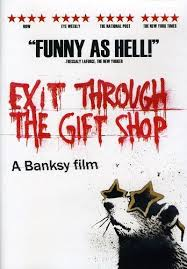
The next documentary we saw was Exit Through The Gift Shop, which ended up being directed by Banksy, a very popular street artist from London. This documentary started as a view of the underground street art movement filmed by Thierry Guetta, but it ends up being about Guetta himself. Guetta initially sets out to document street artists, including Shepard Fairey and Banksy, but then he becomes a street artist himself, being named the controversial "Mr. Brainwash." The film essentially comments on the fine line between art and commerce, what true authenticity is, and the commodification of creativity. 


The last documentary the class ended up watching was a Netflix series called Abstract: The Art of Design. In class, we watched the episode on Ruth E. Carter, who showed how costume design can tell stories about culture, identity, and character, with her work on Black Panther as one of her main examples. At home, I viewed the episode on Ian Spalter which focused on digital product design, especially his role in redesigning Instagram and how he balances user needs with creative decisions. This specific documentary series resonated with me the most. I was very engaged when watching and I took a great interest in learning all the different art forms that exist around me. This series taught me how documentaries can put a simple focus on people’s stories, yet stay impactful. It also taught me how visuals, interviews, and staged shots are integral to making documentaries engaging. Watching this series helped me see how documentaries can connect me with a subject that was otherwise irrelevant for me. 

We also watched Op-Docs, also known as opinion documentaries, which are really short documentary films usually created by independent filmmakers that explore current issues, personal stories, and/or different perspectives. This is usually associated with The New York Times Op-Docs series, where these documentary pieces are published. I saw two incredibly impactful Op-Docs: one about sex work and another about having troubles with cultural identity. These Op-Docs taught me that even if documentaries are short in length, they can still deliver a strong message. Focusing on real stories and personal experiences often make these topics more relatable and engaging, which is an integral aspect of Op-Docs. Op-Docs also show how creative techniques and visual variability can smoothly share opinions and explore different issues. 


All of this extensive research on documentaries helped me learn that documentaries are not a rigid category of film; they take on a wide variety and can be done in numerous ways. Throughout intaking all these pieces, I noted how different technical components of documentaries were done, such as direct/indirect interviews, authentic broll, staged broll, and more. 

I always had a narrow perspective on documentaries because I thought all of them were boring and strictly academic. Now, I can safely say that documentaries might be one of my favorite film pieces because they have the potential to be so impactful.


Monday, December 2, 2024

I Am Now An A-Level Student!


Guess who is back!! I have started AICE Media A Level this year, and I’m excited to see how much more I’ll learn and grow in my second year of this class! 

Last year, when I joined the AS class, I had absolutely no background in film. I did not know anything about production, planning, and editing. I had never even seen the classic movies that get referenced all the time! It felt like a bit of a culture shock, but it was definitely eye-opening and also gave me the chance to learn from the ground up.

The AS course taught me a lot about how films are created and the amount of thought and detail that goes into each step. I started to understand how camera shots and angles, editing, auditory effects, and visuals all come together to tell a purposeful story and make something impactful. Now, moving into A Level, I am ready to take on even more knowledge regarding media, especially in subjects that really fascinate me, like postmodernism. I know I will have more opportunities this year to experiment creatively, which is something I am looking forward to.

This second year feels like another chance to explore new approaches when it comes to media and storytelling. I am ready to be surprised by all the aspects of media and films I still do not know. I am so excited to embark on this journey, and I am even more excited to bring you along, blog.πŸ˜‰πŸ˜‰

Tuesday, April 2, 2024

Creative Critical Reflections!

CCR 1:

https://drive.google.com/file/d/18tDo66ASK-XlXADEladlboQpHb0BxsFl/view?usp=sharing


CC2:

https://drive.google.com/file/d/1FvjqQd6guqrh4YkvuyLk_oi1K8Vf3AIU/view?usp=sharing


Final Product!

 https://drive.google.com/file/d/12eKJORseAApUYqo7ECuSyI4dEBWJEeQD/view?usp=sharing

Coming to an end...

The bittersweet time has come; it is officially the end of this long process of creating a film opening.

Here is my reflection of the process:

While I am immensely proud of our accomplishments with "Knock on Love," I also recognize areas where we could have improved our approach. One aspect I would potentially reconsider is my time management and scheduling. At times, my ambitious goals and underestimation of certain tasks led to tighter deadlines. In the future, I will strive to create more realistic timelines to account for unforeseen circumstances.

Furthermore, I acknowledge the limitations of my technical skills and equipment during this project. As students, my group only had access to basic equipment and software, but I recognize the potential for enhancing our production value with more advanced tools and training. Moving forward, I would prioritize continuing my education in areas such as cinematography, lighting, and post-production techniques to elevate my craft further.

Overall, the production of "Knock on Love" was a transformative learning experience that equipped me with a diverse array of skills, from creative collaboration and problem-solving to technical proficiency and project management. As I reflect on my journey, I am filled with gratitude for the lessons learned and the growth I experienced. Armed with these insights, I am eager to take on on future projects, applying my newfound knowledge and continuously striving to push the boundaries of my abilities as a storyteller.


Portfolio Project

Ahh Job Interview is finally here!! Thank you so much for following along! I had so much fun throughout this entire process! I hope you enj...